
What to Do When You Hurt Your Lower Back: A Physiotherapist's Guide

Sudden lower back pain can be incredibly frustrating. Whether you've experienced a sharp pain when bending over, woken up with a stiff back or developed discomfort after exercise, it can quickly affect your ability to work, sleep and enjoy everyday activities.
The good news is that most episodes of acute lower back pain improve over time, and there are several things you can do to support your recovery.
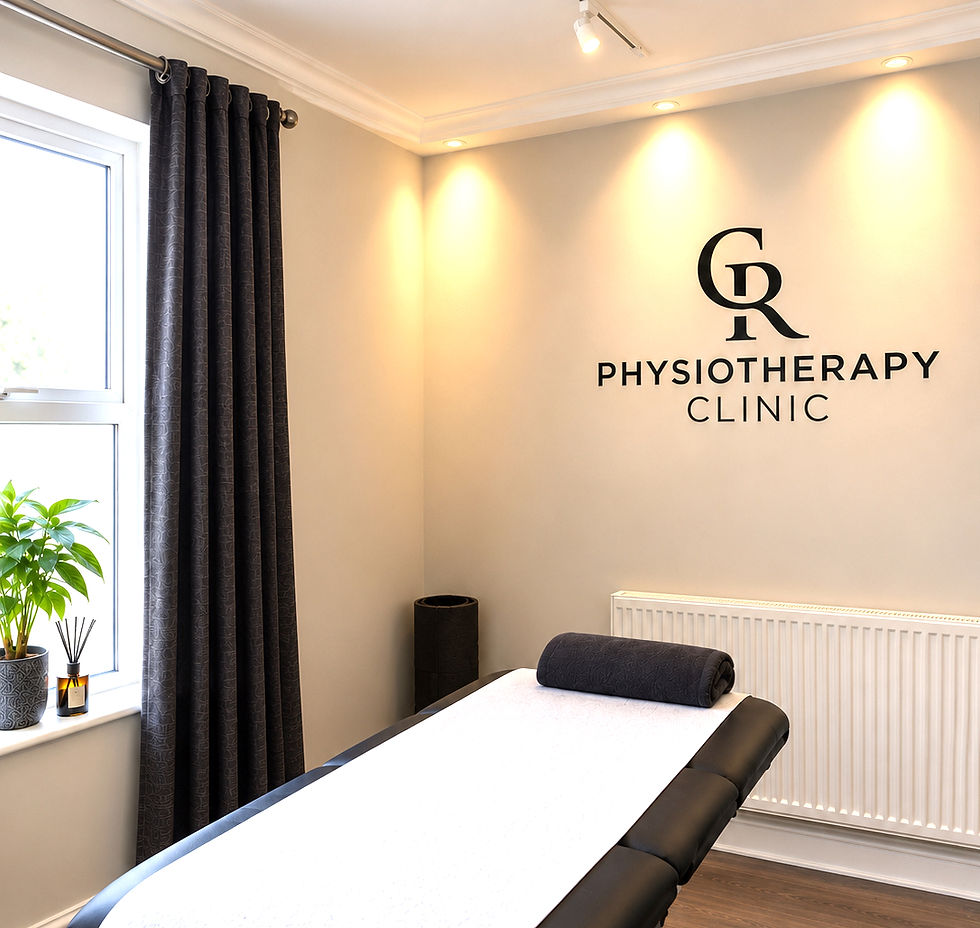
At CR Physiotherapy Clinic in Menston, we regularly help people experiencing lower back pain, from active adults and gym-goers to people whose symptoms are affecting their work and daily lives.
In this guide, Chris Royston, Chartered Physiotherapist, explains what to do during the first 48 hours, which symptoms require medical attention and how a progressive rehabilitation programme can help you return to normal activity.
What causes sudden lower back pain?
Acute lower back pain can develop following a particular movement or activity, but it can also appear without an obvious cause.
Common situations include:
Lifting or moving something heavy.
Returning to exercise after a period of inactivity.
Spending prolonged periods sitting or working at a desk.
Repetitive bending, twisting or physical work.
Waking up with pain or stiffness without a clear injury.
In many cases, the pain is described as nonspecific lower back pain. This means that no single anatomical structure can be confidently identified as the cause.
Although muscles, joints, discs and other spinal structures can contribute to symptoms, experiencing significant pain does not necessarily mean that serious damage has occurred.
An assessment with a physiotherapist can help identify factors contributing to your symptoms and determine the most appropriate management strategy.
The first 48 hours: what should you do?
The first couple of days after developing lower back pain can be uncomfortable, particularly when simple movements such as getting out of bed, sitting or bending become difficult.
The aim during this period is to manage your symptoms while maintaining as much comfortable movement and normal activity as possible.
1. Keep moving within your tolerance
One of the most important recommendations for acute lower back pain is to avoid prolonged bed rest.
Although resting briefly during a painful episode may feel necessary, remaining inactive for extended periods can contribute to stiffness and reduced confidence in movement.
Instead, try:
Short, regular walks throughout the day.
Changing position frequently rather than remaining seated for long periods.
Gentle movements that feel comfortable.
Continuing normal daily activities where reasonably possible.
You don't need to force yourself through severe pain. Start with what you can tolerate and gradually increase your activity as symptoms allow.
2. Consider heat for temporary pain relief
Applying a warm pack or hot water bottle to your lower back may help ease discomfort and muscle tension.
Try using heat for approximately 15–20 minutes at a time, with a protective layer between the heat source and your skin.
Heat can be a useful short-term symptom management strategy, although it doesn't address every possible cause of lower back pain.
3. Modify activities rather than avoiding everything
If certain activities are particularly uncomfortable, temporarily adjust how you perform them.
For example:
Break longer household tasks into shorter periods.
Reduce the weight of objects you're lifting.
Change positions regularly when working at a desk.
Temporarily reduce demanding gym exercises.
Continue walking or other activities that remain manageable.
It's important to understand that some discomfort during movement does not automatically mean you're causing further injury.
The appropriate amount of activity will depend on your symptoms, functional ability and how you respond afterwards.
4. Find comfortable sleeping positions
Lower back pain can make sleeping difficult, especially when changing position during the night.
Some people find relief by:
Sleeping on their side with a pillow between their knees.
Lying on their back with a pillow underneath their knees.
Using pillows for support when changing position.
There is no single correct sleeping position for everyone. Choose whichever position allows you to rest most comfortably.
Lower back pain red flags: when should you seek medical attention?
Most episodes of lower back pain are not caused by serious underlying conditions.
However, certain symptoms require urgent medical assessment.
Seek immediate emergency medical attention if you develop:
New difficulty passing urine, urinary retention or loss of bladder control.
New loss of bowel control.
Numbness or altered sensation around your genitals, inner thighs or back passage.
New or rapidly worsening weakness in one or both legs, particularly when accompanied by other concerning neurological symptoms.
These symptoms can indicate a serious condition such as cauda equina syndrome, which requires emergency assessment.
If these symptoms occur, attend A&E immediately.
Other symptoms that require prompt medical assessment include:
Fever or feeling significantly unwell alongside new back pain.
Severe back pain following significant trauma.
Unexplained weight loss alongside persistent back pain.
A history of cancer with new or concerning back pain.
Severe, persistent pain that does not improve with rest or changes in position.
New or progressive neurological symptoms.
These features do not necessarily indicate a serious condition individually, but they should be considered alongside your medical history and overall presentation.
If you're uncertain whether your symptoms require medical attention, seek advice from an appropriate healthcare professional.
Four gentle exercises for acute lower back pain
Gentle movement can help some people manage acute lower back pain and gradually regain confidence.
The following exercises are examples rather than a universal treatment programme. Not every exercise will be suitable for every person.
Start within a comfortable range and stop or modify an exercise if it significantly worsens your symptoms.
Exercise 1: Quadruped rock backs
Start on your hands and knees, with your hands underneath your shoulders and knees underneath your hips.
Slowly move your hips backwards towards your heels before returning to the starting position.
Suggested starting point: 8–10 repetitions.
This exercise introduces gentle movement through the hips and lower back.
Exercise 2: Supine knee rotations
Lie on your back with your knees bent and feet resting on the floor.
Keeping your shoulders relaxed, gently allow your knees to move from side to side.
Only move as far as feels comfortable.
Suggested starting point: 10 repetitions each side.
This exercise can help reintroduce comfortable rotational movement.
Exercise 3: Glute bridges
Lie on your back with your knees bent and feet flat on the floor.
Gently lift your hips away from the floor, keeping the movement controlled.
Pause briefly before lowering back down.
Suggested starting point: 6–10 repetitions.
If bridging aggravates your symptoms, reduce the movement or leave it out initially.
Exercise 4: Bird dog
Start on your hands and knees.
Slowly extend one leg backwards while keeping your trunk relatively steady.
If comfortable, progress to lifting the opposite arm at the same time.
Return to the starting position and alternate sides.
Suggested starting point: 6–8 repetitions each side.
The aim is to build comfortable movement and trunk control rather than holding your spine rigidly.
These exercises should be adapted to your individual presentation. If you're struggling to move comfortably, a physiotherapy assessment can help identify more suitable starting exercises.
How should you progress your rehabilitation?
As your symptoms improve, rehabilitation should gradually become more challenging.
Although gentle mobility exercises can be useful initially, longer-term recovery often involves rebuilding confidence, strength and tolerance to normal activities.
Depending on your goals, this may include:
Progressive lower-limb and trunk strengthening.
Hip hinge and lifting exercises.
Squats, lunges and loaded carries.
Returning to gym-based resistance training.
Gradually increasing walking, running or sporting activity.
Improving tolerance to work-related tasks.
The goal is not simply to eliminate every sensation in your back.
Instead, rehabilitation should help you return to the activities that matter to you with confidence and improved physical capacity.
Are the McGill Big 3 exercises good for lower back pain?
The McGill Big 3 are a group of exercises commonly used to develop trunk endurance and control.
They include:
Modified curl-up.
Side plank.
Bird dog.
These exercises can be useful within a rehabilitation programme, particularly when appropriately adapted to an individual's current ability.
However, they are not essential for every patient and are not proven to be superior to all other exercise approaches for nonspecific lower back pain.
A successful programme should be individualised according to your symptoms, goals, preferences and physical capabilities.
For some people, walking and basic strengthening exercises may be the most appropriate starting point. Others may benefit from more challenging resistance training or sport-specific rehabilitation.
How can physiotherapy help with lower back pain?
Physiotherapy aims to identify factors contributing to your symptoms, improve your ability to move comfortably and support a gradual return to normal activities.
At CR Physiotherapy Clinic in Menston, your assessment includes a detailed discussion of your symptoms, medical history, activity levels and goals.
Your physiotherapist will assess relevant movements, strength and neurological function where appropriate, while screening for symptoms that may require further medical investigation.
Treatment may include:
Education and reassurance about your condition.
Advice on modifying activities and managing symptoms.
Individualised mobility and strengthening exercises.
Manual therapy where appropriate, as part of a broader treatment programme.
A progressive rehabilitation plan tailored to your work, exercise and lifestyle.
Guidance on returning to gym training, running, golf or other activities.
Our aim is not simply to provide temporary symptom relief, but to help you understand your condition and build the confidence and physical capacity needed for longer-term recovery.
Do you need an MRI for lower back pain?
One of the most common questions we hear is whether lower back pain requires an MRI scan.
For most people experiencing nonspecific lower back pain, an MRI is not routinely necessary.
MRI scans can identify structural changes such as disc degeneration or disc bulges, but these findings are also common in people who do not experience back pain.
Imaging is generally considered when there are concerning clinical findings or when the results are likely to change management.
A physiotherapist can help determine whether further medical assessment or specialist referral may be appropriate.
How long does lower back pain take to improve?
Recovery varies between individuals.
Many people notice meaningful improvements within the first few weeks, although some symptoms may take longer to settle or fluctuate during recovery.
Factors such as previous episodes, physical demands, general health, sleep and confidence in movement can influence how someone experiences and recovers from back pain.
If your symptoms are not improving, are worsening or are significantly affecting your daily life, a reassessment may help clarify the next steps.
You do not necessarily need to wait several weeks before seeking advice.
Frequently asked questions
Should I rest when I hurt my lower back?
Brief periods of rest may be helpful when symptoms are particularly painful, but prolonged bed rest is generally discouraged. Try to remain as active as you comfortably can.
Should I stretch my lower back?
Gentle stretching or mobility exercises may help some people, but they aren't essential for everyone. Choose movements that feel manageable and avoid repeatedly forcing painful positions.
Is walking good for lower back pain?
Walking is often a useful way to remain active during recovery. Start with distances and durations you can tolerate, then gradually increase them as your symptoms allow.
Can I still go to the gym with lower back pain?
In many cases, yes. You may need to temporarily modify certain exercises, reduce resistance or adjust your training volume. Your return to normal training should be guided by your symptoms and functional ability.
When should I see a physiotherapist?
Consider seeing a physiotherapist if your pain is affecting work, sleep, exercise or everyday activities, if you are unsure how to manage it, or if symptoms are not improving as expected.
Can lower back pain return?
Yes. Recurrences are common, but this doesn't necessarily mean your spine is damaged or that previous rehabilitation has failed. Staying active and maintaining physical capacity can help you manage future episodes.
Lower back pain physiotherapy in Menston, near Ilkley, Guiseley and Otley
If you're experiencing lower back pain and would like professional advice, CR Physiotherapy Clinic provides one-to-one physiotherapy assessments and rehabilitation in Menston, West Yorkshire.
We regularly welcome patients from Ilkley, Guiseley, Otley, Burley-in-Wharfedale, Baildon and the surrounding areas.
With extensive experience in professional sport and sports medicine, Chris Royston combines detailed clinical assessment with practical, progressive rehabilitation tailored to your individual needs.
Whether your goal is to return to work comfortably, enjoy walking again, get back to the gym or resume your favourite sport, we can help you develop a clear plan.
Ready to get your back moving again?
Book your physiotherapy appointment online at:
Or explore our dedicated Back Pain page to learn more about how we assess and manage lower back pain.
About the author
Chris Royston — Chartered Physiotherapist, BSc (Hons), MSc Sport & Exercise Medicine
Chris is the owner of CR Physiotherapy Clinic in Menston, West Yorkshire. He has approximately 15 years of experience working in elite sport and physiotherapy, including senior physiotherapy and medical leadership roles in professional football.
He specialises in musculoskeletal assessment, sports injuries and progressive rehabilitation, helping patients return to the activities that matter most to them.
He has worked as a first contact practitioner, assessing acute low back pain and chronic back pain conditions and alongside leading spinal specialists in the UK.
Last reviewed: November 2026.
References and further reading
NICE Guideline NG59: Low back pain and sciatica in over 16s — assessment and management.
NHS: Back pain — symptoms, self-care and when to seek medical advice.


Comments